
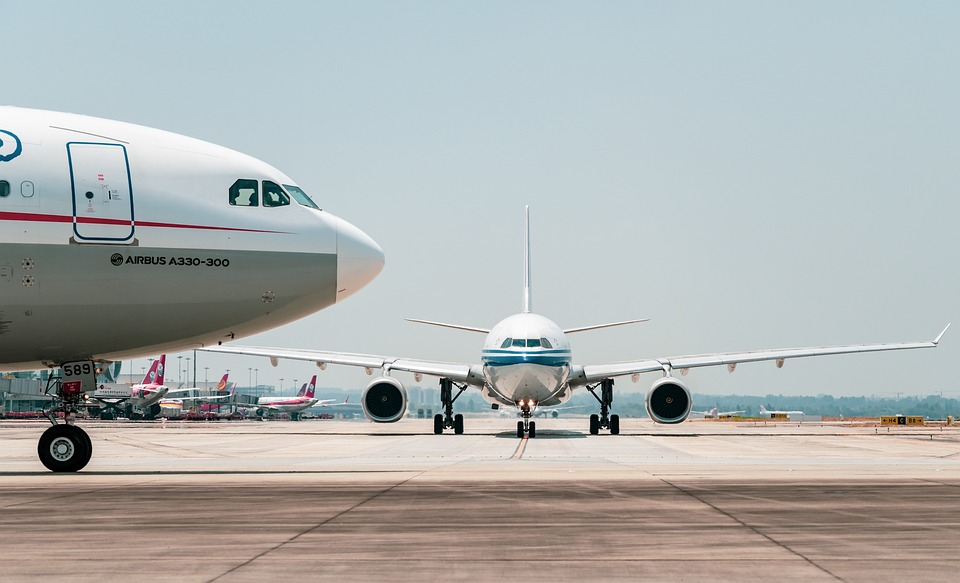
1 - The first airplane accident occurred in 1908, when Orville Wright was piloting a plane that crashed and killed passenger Lt. Thomas Selfridge.
2 - The deadliest airplane accident in history was the 1977 Tenerife airport disaster, which claimed 583 lives.
3 - Airplanes are designed to withstand lightning strikes, which occur on average once per year per airplane.
4 - Airplane crashes are more likely to occur during takeoff and landing than during cruising altitude.
5 - The vast majority of airplane accidents are caused by pilot error or mechanical failure.
6 - In the event of a water landing, airplane seats can be used as flotation devices.
7 - The FAA requires all passengers to keep their seat belts fastened while the plane is taxiing, taking off, and landing.
8 - The chances of dying in an airplane crash are about 1 in 11 million, making it one of the safest forms of transportation.
9 - Airplanes are required to have enough life vests and flotation devices for every passenger on board.
10 - In the event of a cabin depressurization, oxygen masks will automatically drop down from the ceiling for passengers to use.
11 - Flight data recorders, or "black boxes," are designed to survive extreme crashes and provide valuable information for accident investigators.
12 - In 2018, there were 160 airplane accidents worldwide, resulting in 534 deaths.
13 - The deadliest year for airplane accidents in history was 1972, with 2,373 deaths.
14 - The "Miracle on the Hudson" occurred in 2009, when US Airways Flight 1549 successfully landed on the Hudson River after striking a flock of birds.
15 - In the United States, the National Transportation Safety Board investigates airplane accidents.
16 - Some airports have wildlife management programs to prevent birds and other animals from interfering with airplane operations.
17 - In the event of a fire on board an airplane, flight attendants are trained to evacuate passengers within 90 seconds.
18 - The term "black box" is a misnomer, as flight data recorders are typically painted bright orange to aid in their recovery.
19 - The majority of airplane accidents occur during the takeoff and landing phases of flight.
20 - The Airbus A380, currently the world's largest passenger airplane, has a maximum takeoff weight of 1.2 million pounds.
21 - Some airlines have introduced "fatigue risk management systems" to help prevent pilot fatigue, a leading cause of airplane accidents.
22 - The Boeing 747, known as the "jumbo jet," was first introduced in 1969 and revolutionized air travel.
23 - Airplanes are equipped with a "black triangle" symbol to indicate where passengers should go in the event of an emergency.
24 - The Federal Aviation Administration (FAA) requires all commercial pilots to retire at age 65.
25 - In the event of an airplane crash, passengers seated in the rear of the plane are statistically more likely to survive.
26 - The first commercial airplane flight took place on January 1, 1914, between St. Petersburg and Tampa, Florida.
27 - Airplanes are required to carry enough fuel to reach an alternate airport in case of an emergency.
28 - The vast majority of airplane accidents occur during the descent and landing phase of flight.
29 - In 2019, the global aviation industry supported 87.7 million jobs and contributed $3.5 trillion to the world economy.
30 - The longest nonstop commercial airplane flight is currently the Singapore Airlines flight from Singapore to New York, which takes nearly 19 hours.



Yorumlar
Yorum yazabilmek için giriş yapmalısınız.
Bilgi: Butona tıkladığınızda xloji güvenli giriş sayfasına yonlendirileceksiniz. Giriş yaptığınızda otomatik olarak bu sayfaya geri döneceksiniz. İlk giriste hoş geldin enerjisi tanımlanır.
Yorumlar yükleniyor...